Bloody Mary Shrimp: The Definitive Guide to Lineage, Breeding, and Care
 Adam Milton-Barker 502 2026-05-10
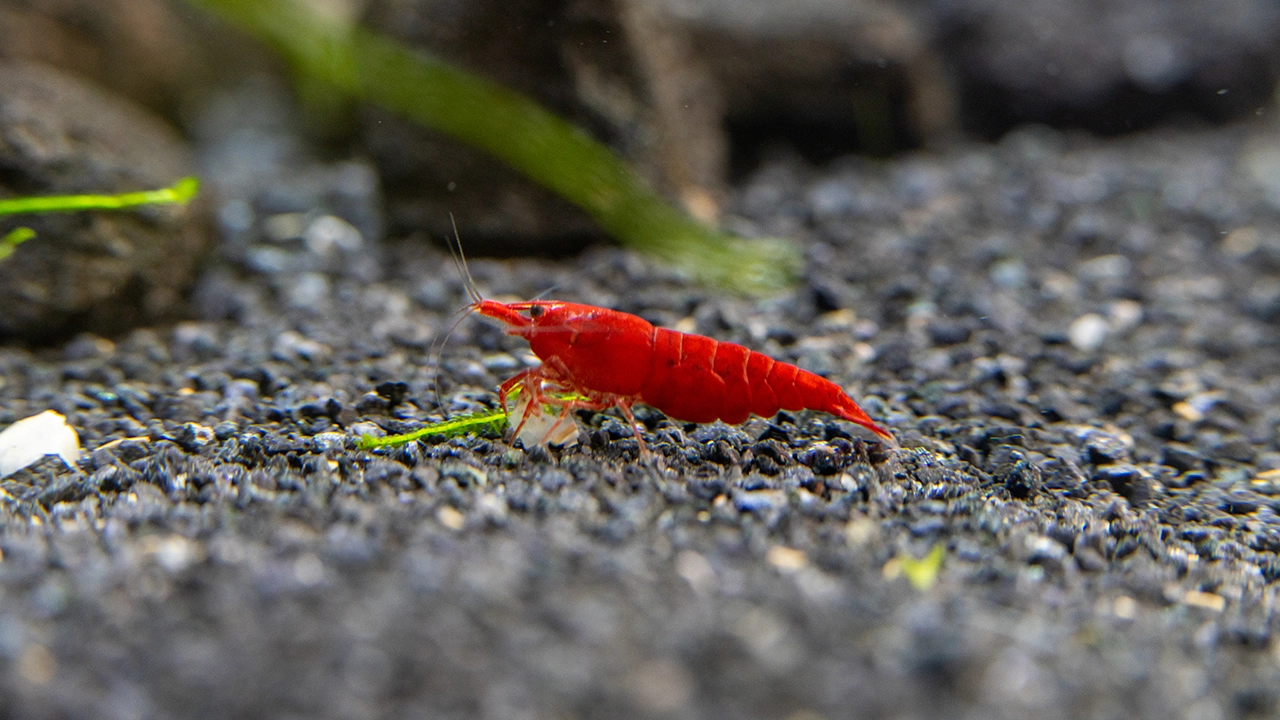
The Bloody Mary is the ultimate optical illusion in the shrimp hobby. Most people see the deep crimson and assume they are just a high-grade Red Cherry, but Bloody Mary come from the Shoko (Chocolate) lineage, and the biology and genetics are fundamentally different. While a Painted Fire Red is bred for a thick, matte-red shell, Bloody Mary have a completely transparent exoskeleton, meaning the intense colour you see is actually their red flesh glowing from the inside. This internal pigment is what creates the signature "wet-look" gloss that shell-based red shrimp can never replicate.
Lineage and Identification
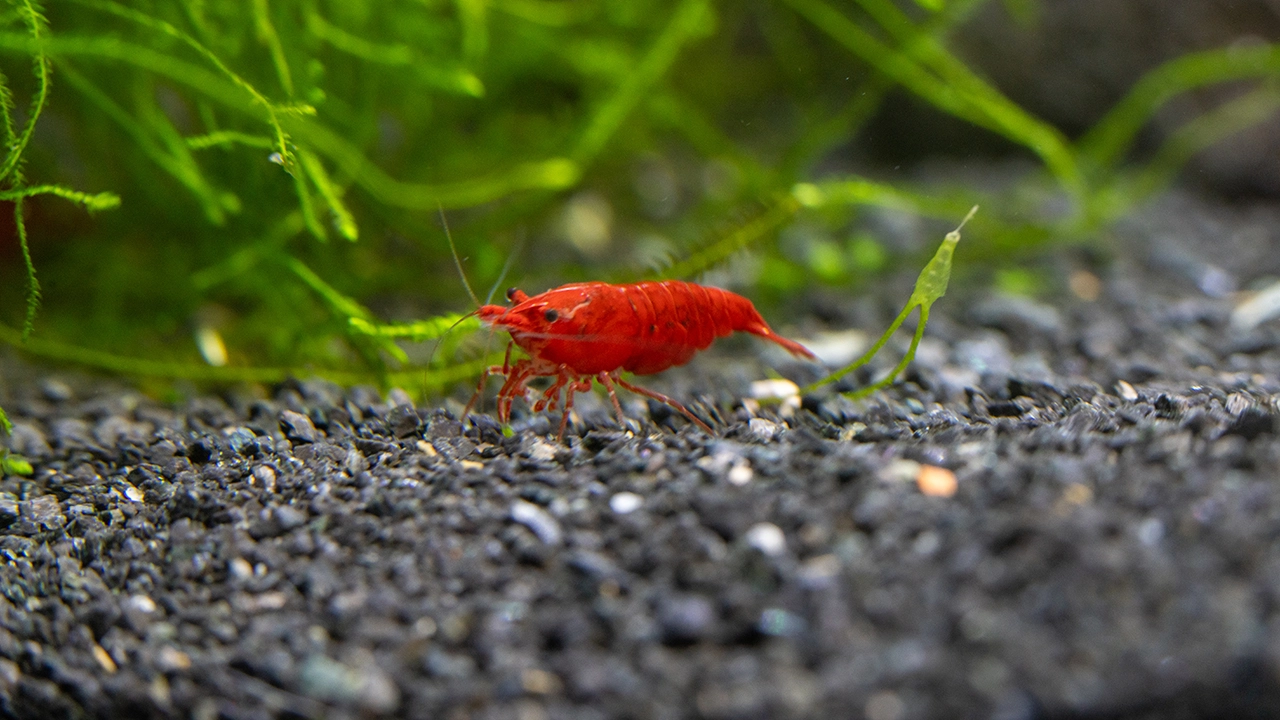
To understand this shrimp, you have to look at the Shoko ancestry. Because the red is internal tissue and not a "painted" shell, the appearance is high-definition and translucent rather than flat and opaque.
A reliable physical marker for a pure Bloody Mary line is a shorter rostrum (the pointed snout) compared to the standard Cherry line. To verify your stock, check their discarded moults. Since the pigment is in the flesh and not the shell, a Bloody Mary moult will be crystal clear. If the moult has a pink or reddish tint, that shrimp belongs to the Cherry lineage where the colour is built into the exoskeleton.
Setup and Biofilm Management
A successful breeding environment for Bloody Mary shrimp must prioritise water stability and maximum surface area. Using an inert substrate is the most reliable method for Neocaridina, as it prevents the floor of the tank from altering the water chemistry. Unlike active soils, which buffer the pH downward, an inert substrate keeps parameters rock-solid and prevents the fluctuations that cause colony crashes.
The hardscape should incorporate materials such as Dragon Stone. Its porous nature provides a massive amount of surface area for biofilm and microorganisms to colonise, creating a constant natural food source. The submerged environment should be densely planted with a mix of Java moss, Java fern, and Hornwort. These plants provide the essential cover and grazing surfaces required for adults and juveniles alike.
Surface management is a critical component of the biological filter. A combination of floating plants—specifically Water Lettuce, Amazon Frogbit, and Salvinia Cucullata—effectively strips nitrates from the water column. The hanging root systems of these floaters serve as a primary foraging ground for shrimplets, keeping them in a safe, nutrient-rich area of the tank during their most vulnerable stages.
Water Parameters and Chemistry Stability
While Neocaridina are widely considered hardy, the Bloody Mary line is particularly sensitive to rapid fluctuations in water chemistry. Success is not defined by hitting a specific "textbook" number, but by maintaining absolute consistency. Sudden shifts in temperature, TDS (Total Dissolved Solids), KH, or GH are the primary triggers for colony-wide stress and moulting failures.
The following ranges are the optimal targets for maintaining health and promoting active breeding in a Bloody Mary colony:
- pH: 7.6 (Range: 6.8–8.0)
- KH: 6 (Range: 3–10)
- GH: 7 (Range: 6–12)
The Role of KH and GH
Carbonate Hardness (KH) and General Hardness (GH) are the most critical factors for invertebrate health. KH acts as a buffer for pH, preventing the "swings" that can lead to acidosis. GH measures the concentration of calcium and magnesium in the water, which the shrimp require to build their exoskeletons.
If these levels are too low, the shrimp will struggle to form a new shell. If they are too high, or if they change too rapidly, it can lead to the "White Ring of Death." This is a visible fracture behind the carapace caused by the shrimp being unable to successfully break out of its old shell during a moult. Once this fracture appears, the shrimp is almost always lost.
Temperature and TDS Sensitivity
Temperature should ideally be kept between 18°C and 24°C. While they can survive outside this range, stability is vital. Rapid temperature drops during water changes often trigger a "forced moult," which can kill the shrimp if its internal tissue isn't ready for a new shell. Furthermore, higher temperatures decrease the water's oxygen-carrying capacity and accelerate the shrimp's metabolism, which can lead to a shorter lifespan and higher susceptibility to bacterial infections.
TDS (Total Dissolved Solids) should be monitored to ensure the mineral balance remains consistent. In a mature setup, a TDS range of 150–250 is common. However, a rising TDS combined with stable GH/KH often indicates an accumulation of nitrates or organic waste, signaling that a maintenance change is required.
Acclimatisation
Acclimatisation is the most common point of failure for hobbyists. Bloody Marys must be drip-acclimated over a period of two to three hours. Sudden shifts in TDS or temperature trigger a forced moult, which is usually fatal as the shrimp's body is not biologically prepared for the transition.
How to Drip Acclimatise:
- Empty the shrimp and all of their original bag water into a clean, dedicated bucket or container.
- Use a length of airline tubing and a plastic control valve (or a loose knot) to start a siphon from the destination aquarium into the container.
- Adjust the valve or knot to achieve a slow, steady drip—roughly 1 to 2 drops per second.
- Continue the drip until the volume of water in the container has at least tripled. This process should take between two and three hours to ensure the shrimp's internal osmotic pressure adjusts safely.
- Once complete, net the shrimp and release them into the aquarium. Never pour the mixed acclimatisation water into your main tank.
Water Maintenance and RO Usage
Routine water maintenance is about preserving stability rather than just removing waste. Large, sudden changes are dangerous; we recommend small, 10–15% water changes once a week.
For maximum consistency, using Reverse Osmosis (RO) water remineralised with a dedicated shrimp mineral (such as GH/KH+) is the gold standard. RO water allows you to start from a pure baseline of 0 TDS, ensuring you are not introducing chlorine, heavy metals, or fluctuating tap water minerals into the colony. This is the only way to guarantee your parameters stay identical every single week.
When adding the new water back into the tank, you must drip or stream it in slowly. Pouring water in directly creates a sudden shock zone of different temperature and chemistry. Slow entry via a drip line or a very thin stream ensures the transition is gradual enough for the shrimp to adjust without triggering a stress-induced moult or osmotic shock. Always ensure the new water is matched as closely as possible to the tank’s current temperature before starting the process.
The Stability Rule
The most important rule in Neocaridina care is to never "chase" numbers with chemicals. Using liquid buffers or pH-adjusters creates an unstable environment of constant peaks and troughs. The shrimp will adapt to a slightly "off" parameter as long as it is stable; they will not survive a tank where the chemistry is being altered every few days.
Breeding and Juvenile Development
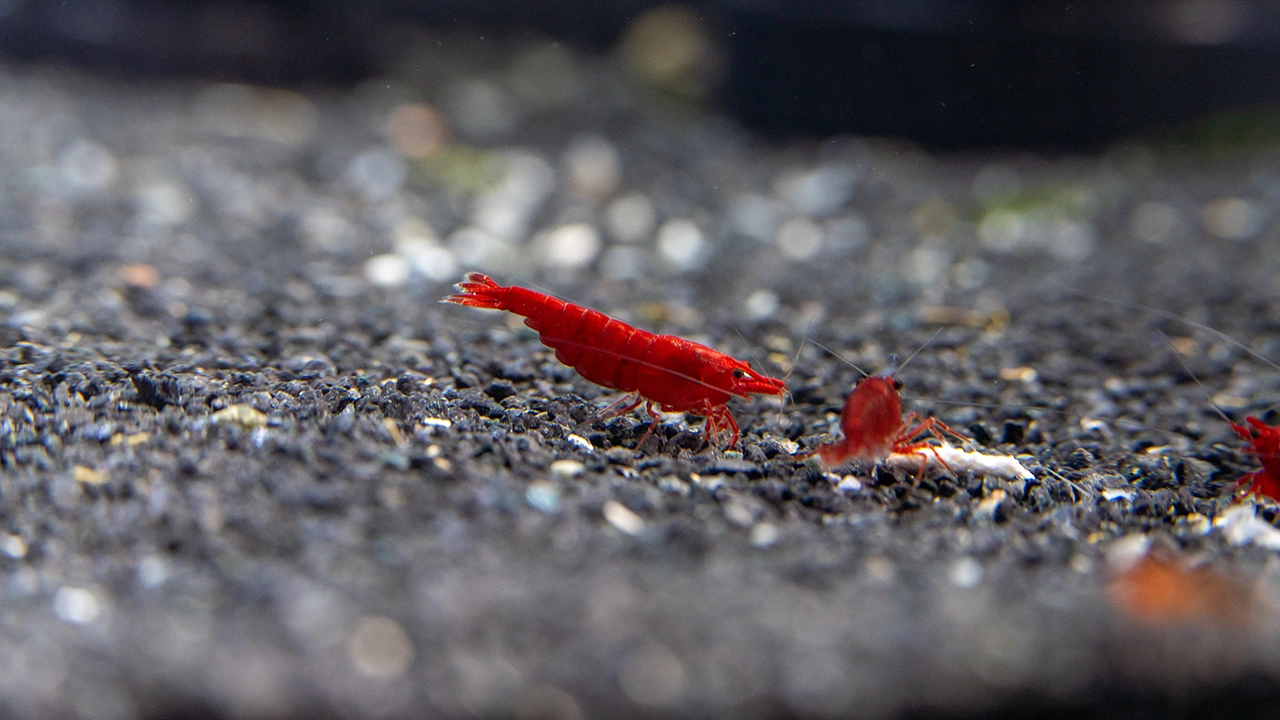
Quality is determined by full-body colour density. This must include the legs and swimmerets; if these are clear or splotchy, the shrimp is low-grade or a hybrid. Consistent culling is mandatory to keep the line strong and stop it from reverting to the base Shoko traits.
When it comes to breeding, the shrimplets are the best indicator of a stable line. High-quality Bloody Mary babies should show red pigment almost immediately after hatching. They do not look like transparent "wild-type" or brown shrimp for the first few weeks of life. Crucially, a stable, pure Bloody Mary line should never throw orange babies. If orange offspring appear in the tank, it is a definitive sign that the genetics have been compromised or crossed.
Any offspring that stay clear or fail to develop deep internal pigment must be culled immediately to ensure the colony's genetics stay concentrated on that signature red flesh. If your colony is producing a high percentage of clear or pale offspring, the genetics are weak or have been crossed with inferior Cherry stock.
The Dangers of Cross-Breeding Lines
Never cross-breed different colour lines of Neocaridina. While beginners are often tempted to mix varieties to see what happens, the result is almost always a reversion to the "wild-type"—the dull brown or transparent genetics that these shrimp originally came from. In the case of Bloody Marys, crossing them with Red Cherries is a frequent and damaging mistake because both appear red to the naked eye.
Because the Bloody Mary uses internal tissue pigment from the Shoko line and the Cherry uses shell pigment, mixing them destroys the genetic focus of both traits. The offspring usually end up as "mutts" with muddy, inconsistent coloration that lacks the depth of either parent. To maintain a high-grade colony, the Shoko-based Bloody Mary line must remain completely isolated from every other Neocaridina variety.
Beginner Hobbyist Keeping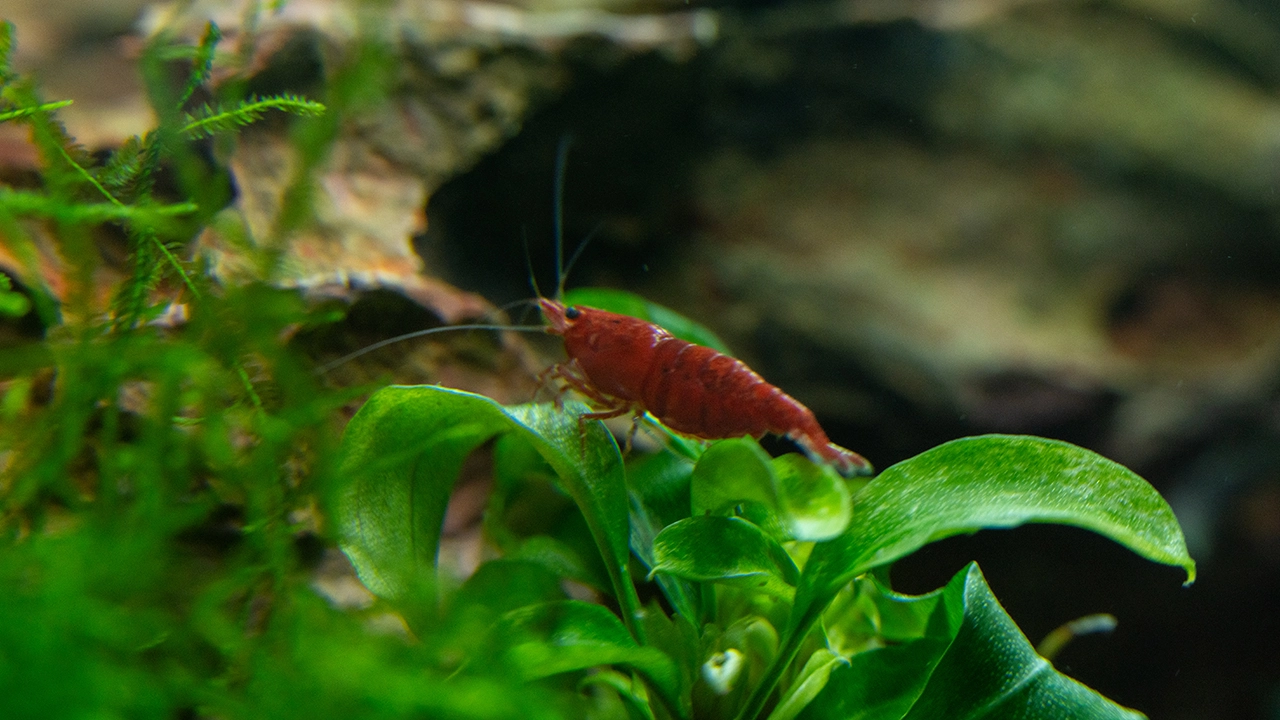
If you are keeping Bloody Marys for a home display rather than professional breeding, the focus shifts to long-term colour vibrancy and visual impact. Even without a culling program, maintaining a high-quality environment is what keeps the internal red tissue saturated and the colony active.
Tank Mates and Community Life
Choosing companions for your shrimp requires caution, as almost any fish capable of fitting a shrimplet in its mouth will hunt them.
- The Only 100% Safe Fish: Otocinclus catfish are the only fish that are guaranteed to leave shrimplets alone.
- Snails: Nerite and Ramshorn snails are excellent tank mates that won't interfere with the shrimp or their breeding.
- Nano-Fish Risks: Species like Chilli Rasboras or Ember Tetras are often labelled "shrimp-safe," but they will still predate on the smallest babies. To keep fish, you must provide dense clumps of Java moss to give shrimplets a chance to survive until they are large enough to be ignored.
Substrate and Visual Contrast
To get the best visual result, always use a dark, inert substrate. Because Bloody Marys have a transparent shell, their internal pigment reacts to their surroundings. On light-coloured sand, they will often "wash out" or look paler as a natural camouflage response. A black or dark grey substrate prevents this and provides a sharp contrast that makes the ruby-red flesh appear significantly deeper.
Algae and Cleaning
Hobbyists often over-clean. For Bloody Marys, a "dirty" looking tank is a healthy one. Do not scrub all the algae off the back glass or hardscape; this film is the primary source of biofilm. A sterile tank forces the colony to rely entirely on the food you provide, which can lead to nutritional gaps. Only clean the front glass for viewing and leave the rest for the shrimp to graze on.
Hardware and Filter Safety
If you are using a hang-on-back or internal power filter, you must fit a fine sponge pre-filter over the intake. Without this, shrimplets will be sucked into the motor and killed. Sponge filters are the gold standard for beginners because they are safe for babies and provide a massive additional area for biofilm to grow.
The "Hands-Off" Philosophy
The most successful tanks are the ones that are tampered with the least. Once your water parameters are stable, stop adjusting them. Avoid using "tonics" or "liquid carbon" products; many of these contain chemicals that are toxic to invertebrates in high doses. If the shrimp are active and you see "berried" females carrying eggs, the environment is correct.
Advanced Hobbyist Breeding and Colony Management
For a hobbyist to successfully breed Bloody Marys, the maturity of the ecosystem is more important than the tank size. These shrimp require a seasoned setup with established biofilm; they will fail in a sterile, brand-new tank. We recommend letting a setup age for at least six weeks before introducing stock to ensure a stable microbial balance.
Temperature control is a primary tool for colony management. While they can survive between 18°C and 26°C, a steady 22-23°C is the ideal range for breeding. Higher temperatures will force a faster metabolism and quicker breeding cycles, but it significantly shortens the lifespan of the shrimp and increases the risk of bacterial infections. Lower temperatures result in slower growth but produce larger, hardier individuals with longer lives.
The Selective Breeding Process
Selective breeding is an active, ongoing requirement. You must maintain a dedicated cull tank for individuals that fail to meet the grade. Leaving inferior shrimp in the main breeding colony will rapidly degrade the quality of future generations. Culling should focus on:
- Leg Colour: Any shrimp with clear or splotchy legs must be removed.
- Tissue Density: Remove any shrimp where the red flesh appears "thin" or patchy.
- Growth Rate: Individuals that are significantly smaller or weaker than their siblings should be culled to keep the genetics robust.
Health and Parasite Management
In a stable setup, a Bloody Mary will live for about 1.5 to 2 years. Monitoring their behaviour and physical appearance is the only way to ensure the long-term survival of the colony, regardless of whether you are a beginner or an advanced breeder.
Health Indicators
Constant foraging is the primary sign of a healthy shrimp. If the entire colony is sitting still, lethargic, or hiding, it usually indicates a water quality issue such as an ammonia spike or a drop in dissolved oxygen levels. Healthy shrimp should be constantly moving their swimmerets and picking at surfaces for biofilm.
Common Parasites
You must watch for specific parasites that are common in the shrimp hobby:
- Vorticella: These appear as white, fuzzy, bell-shaped growths, usually concentrated around the nose (rostrum) or the edges of the shell.
- Scutariella Japonica: Small, white, worm-like parasites that typically live on the rostrum or can be seen moving inside the gill chamber.
- Planaria: These are flatworms with a distinct triangular (arrow-shaped) head and visible eyespots. Unlike the other parasites, Planaria are predatory pests that live in the substrate. They produce a paralysing mucus and will actively hunt and kill shrimplets or vulnerable adults that have just moulted.
Treatment and Prevention
Both parasites are usually a result of poor water quality or introducing unquarantined plants and livestock. They are easily treated with salt dips using aquarium salt or specific shrimp-safe medications like Panacur and No-Planaria. Catching these early is essential to prevent them from spreading through the whole colony.
Maintaining a consistent diet with the Glasgarten range and providing Mineral Junkie ensures the shrimp have the nutritional support and mineral density needed to maintain a strong immune system and robust exoskeleton, making them far more resistant to parasitic infections and moulting complications.
Rotational Feeding
Maintaining intense red internal tissue requires a mineral-heavy, varied diet. We use a rotational schedule to ensure full nutritional coverage:
- Glasgarten BacterAE: Essential for maintaining the biofilm levels needed to sustain a high-population colony.
- Glasgarten Shrimp Baby: Specific nutrition for growth and development in young shrimplets.
- Glasgarten Shrimp Dinner: The core daily nutritional requirement for adult shrimp.
- Glasgarten Shrimp Fit: Supports the immune system to reduce mortality during moulting cycles.
- Glasgarten Mineral Junkie: Provides the essential minerals required for strong exoskeleton formation and clean moults.
- Snowflake (Soybean Hulls): A low-pollution grazing source that can stay in the tank without fouling the water.
- Bloodworms: Occasional protein boosts to help females with egg production and to increase the growth rate of young shrimp.
Whether you are managing a professional breeding operation or a single home display, success with Bloody Mary shrimp depends entirely on respecting the biology of the Shoko lineage. These are not standard Cherries, and they cannot be treated as such; their deep red internal tissue requires a specific focus on mineral density and absolute water stability to maintain its high-definition glow.
By prioritising a mature, biofilm-rich environment and resisting the urge to tamper with established water chemistry, keepers at every level can ensure their colony remains productive and vibrant. Consistency in rotational feeding, rigorous acclimatisation, and a commitment to the "hands-off" philosophy are the essential foundations for maintaining the most visually impressive red variety in the hobby. Regardless of your experience level, the goal remains the same: provide the stable, nutrient-rich conditions that allow the signature ruby-red flesh to develop fully across every generation.